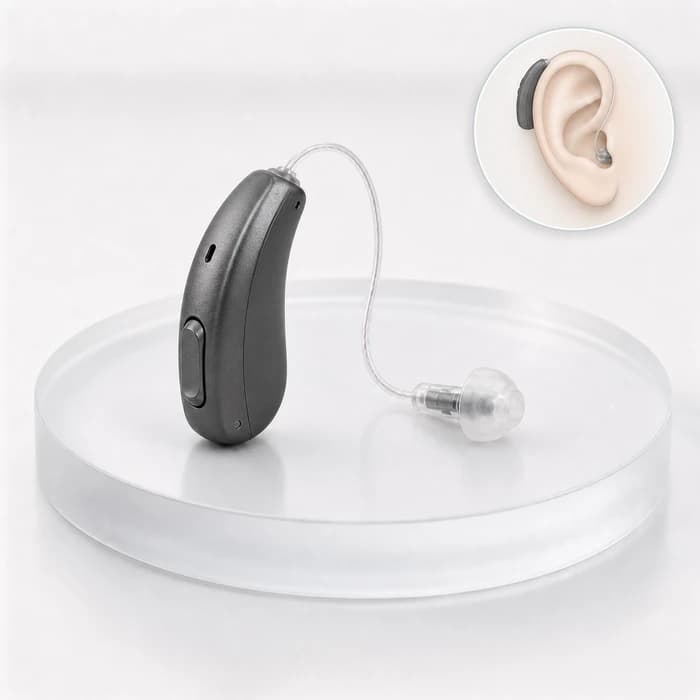
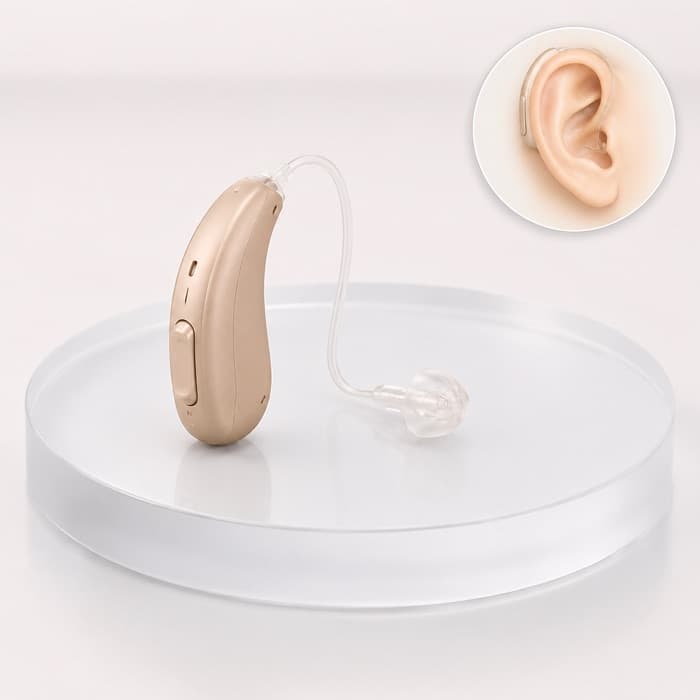
In a receiver-in-canal design, a wire connects the part behind the ear to a speaker in the ear. In a conventional behind-the-ear design, sound travels through tubing to an earpiece.
Begin with the design, then your needs
Receiver-in-canal is often shortened to RIC; you may also see the term RITE. The speaker is positioned in or near the ear canal. In a conventional BTE, the main device sits behind the ear and sound reaches the ear through a tube.
The design name does not tell you the full range of features, the technology level or whether a particular model is suitable. Those questions need your hearing results, ear health and preferences.
Look at the earpiece as well as the device
Ask whether a soft dome, custom earpiece or another fitting is proposed and why. The piece in the ear affects comfort, handling and maintenance as well as how the whole fitting works.
If you have recurring ear problems, very small ear canals or difficulty handling small parts, mention that before choosing on appearance. The professional can consider those factors when explaining the options.
Compare everyday handling
- Can you insert and remove the proposed aid comfortably?
- How will it sit with your glasses or headwear?
- Which parts need cleaning or replacing?
- What would you do if the sound became weak?
- Is charging or battery handling manageable for you?
A hands-on demonstration can be more informative than a photograph with no sense of size.
Features vary within each style
Do not assume every RIC has the same phone connectivity or that every BTE uses the same battery. Ask for the exact model details and which features are relevant to the situations you want to improve.
Bring the comparison back to the fitting
The right question is not which style is universally better. It is why a particular style and earpiece are appropriate for your hearing, routine and support needs. Ask how the fitting will be checked and what options exist if it is uncomfortable or difficult to manage.