Earwax removal
Clear hearing. Safe removal.
Our audiologists use microsuction, the UK's preferred and safest technique for removing excess earwax. No water, no syringes, no fuss. Clearer hearing starts today.
Book earwax removal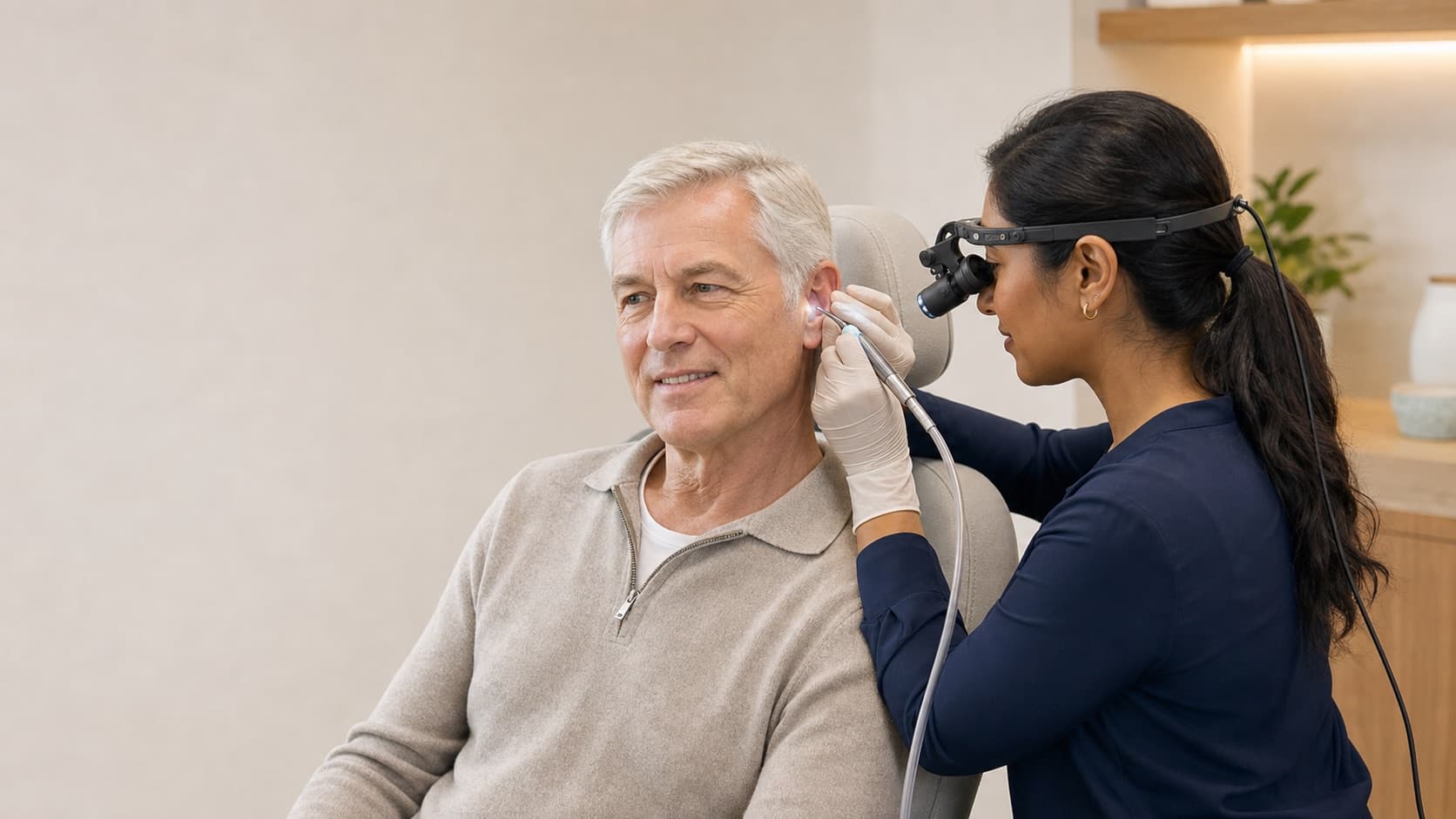
Signs of an earwax build-up
A blocked ear can feel different from person to person. These symptoms aren't always caused by earwax, so it's important to have your ears checked rather than trying to diagnose the problem yourself. Not sure if it's earwax or something else? Take our quick hearing check.
Common symptoms
- Muffled or reduced hearing
- A blocked or full sensation in the ear
- Ringing or buzzing sounds, known as tinnitus
- Earache or discomfort
- Hearing aids sounding quieter, whistling or not working as expected
- Occasional dizziness
Benefits of microsuction
- Performed by HCPC-registered hearing care professionals
- Microsuction, the gold standard technique, safer than syringing
- No water, no mess, no risk of infection from irrigation
- Results are immediate, you can hear clearly straight away
- Both ears treated in a single 30-minute appointment
- Available in-clinic or as a home visit
If you're experiencing sudden or severe hearing loss, please contact your GP in the first instance.
What happens at your appointment?
Your appointment begins with a conversation about your ear health, symptoms and relevant medical history, including any previous ear surgery, infections, perforated eardrums, hearing aids or earlier wax-removal treatment.
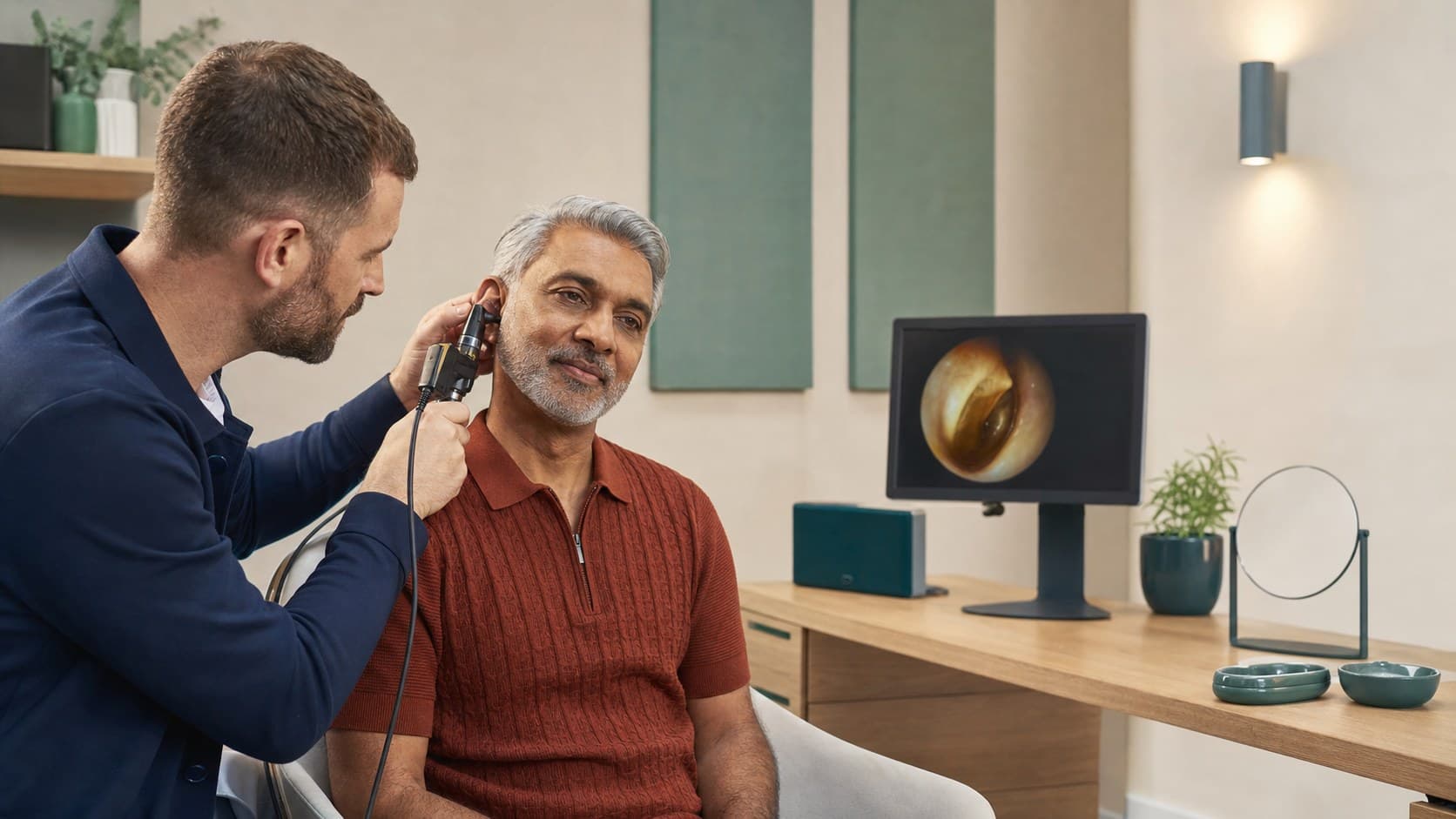
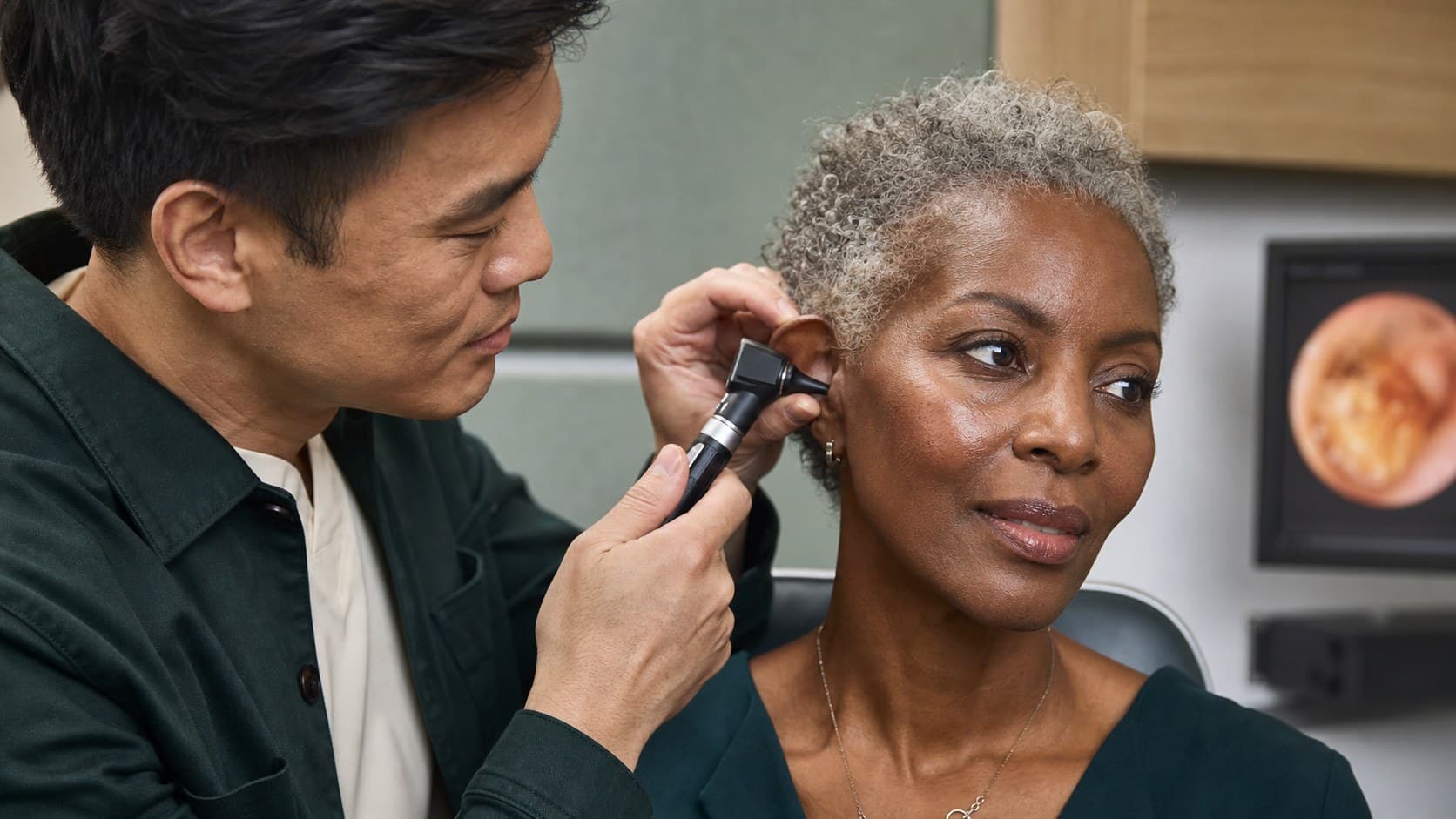
We'll then examine each ear using an otoscope or video otoscope to see the ear canal and establish whether wax is present, how much has accumulated and whether removal is appropriate. If treatment can safely go ahead, the practitioner will talk you through the procedure and check your ears again once the wax has been removed. Appointment times can vary, and particularly hard or compacted wax may need further softening or another visit.
Microsuction earwax removal
Microsuction uses a fine suction tube to gently lift wax and debris from the ear canal, with the practitioner viewing the inside of your ear throughout. Unlike irrigation, it doesn't flush the ear with water, you may hear suction sounds and notice a light pulling or tickling sensation, and you should tell your practitioner immediately if you feel uncomfortable so the procedure can be paused.
Equipment used
- An otoscope or video otoscope to inspect the ear canal
- A clinical microsuction unit with a fine suction tip
- Specialist instruments for the careful removal of accessible wax
- Single-use tips and appropriate protective equipment to support good hygiene
Preparing for your visit
Softening the wax before your appointment can make it easier and more comfortable to remove. We may recommend a suitable wax-softening product for several days beforehand, please follow the instructions provided by our team or ask a pharmacist for advice.
Before using ear drops
Ear drops aren't suitable for everyone. Speak to a healthcare professional before using them if you have a known or suspected perforated eardrum, an active ear infection, previous ear surgery or any uncertainty about your ear health.
Do not insert cotton buds, fingers or other objects into the ear canal, and avoid ear candles or home suction devices, these can push wax further in and irritate the ear.
After your treatment
Many people notice an improvement in the blocked sensation or their hearing soon after successful wax removal. Your ear canal may feel slightly sensitive for a short time, particularly if the wax was hard or tightly packed. We'll provide any aftercare advice that's relevant to you, and if you're prone to recurring build-ups we can discuss a simple ear-care routine and when to have your ears checked again.
Seek medical advice if you develop significant pain, discharge or bleeding from the ear, or if your symptoms continue after the wax has been cleared. Sudden hearing loss should be treated as an urgent medical concern rather than assumed to be earwax.
Ready for clearer hearing?
Most appointments available within 3–5 days. Home visits also available if you can't travel.